
Golden Dome: Defense and Space Stocks Positioned to Win
Trump's January 2025 executive order activated Golden Dome, the largest domestic missile-defense procurement in a generation. The program targets ballistic, hypersonic, and cruise missile threats against the United States. Cost estimates run near a baseline of $175 billion, while the Congressional Budget Office puts the number closer to $1.2 trillion over twenty years. Whatever the final figure, this is one of the largest defense procurement cycles in a generation.
What the Program Actually Buys: Golden Dome Missile Defense Procurement
Golden Dome fuses space-based sensors, ground radars, and interceptors into one layered system. The design detects and defeats threats across every flight phase, from launch through reentry. Proliferated low-Earth-orbit satellites give it global coverage. Automated battle management software routes interceptors to targets in real time. Firms that mass-produce satellites, integrate complex systems, and move data fast sit in the best position here.
This departs sharply from legacy missile defense. Traditional programs relied on a few expensive fixed interceptors on the ground. The new model spreads risk across many cheaper assets, so a single failure does not blind the system. That shift also blows open the supplier base well beyond the traditional primes. More vendors means more public companies with a real shot at the money.
Follow the Money: Golden Dome funding, SHIELD contract awards
The gap between a $175 billion estimate and a $3.6 trillion one tells you something useful. The architecture is not locked in. The American Enterprise Institute puts lifetime costs that high once satellite replacement cycles enter the picture. Satellites in low orbit decay fast and need regular replacement. That drives long-run sustainment costs well above what the early headline numbers suggest.
Near-term funding is more concrete, however. Congress directed roughly $24.4 billion to Golden Dome in fiscal 2025. About $25 billion more sits in the fiscal 2026 reconciliation plan. The Space Force already awarded up to $3.2 billion for a space-based interceptor layer. That money goes to a competing pool of vendors, and it is moving now, not in some future decade.
The main contracting vehicle is called SHIELD. It is an indefinite-delivery, indefinite-quantity contract with a reported ceiling near $151 billion over ten years. The Missile Defense Agency expanded the qualified vendor pool from roughly 1,014 initial offerors to around 2,100 firms. Individual task orders compete within that pool. For investors, a SHIELD task-order award is the signal worth tape-watching — it converts a qualified vendor into booked revenue on the income statement.
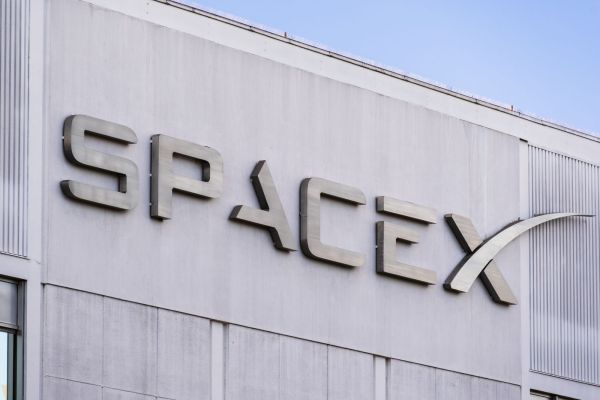
The Primes Carry the Integration Work: Lockheed, Northrop, RTX Integration Roles (SpaceX?)
The large defense contractors still anchor the program. Lockheed Martin (LMT) brings command-and-control, the Next Generation Interceptor, and THAAD. (RTX) concentrates on sensors and radar tracking. Northrop Grumman (NOC) develops boost-phase space-based interceptors. General Dynamics (GD) and L3Harris (LHX) cover secure communications, cryptographic hardware, and military electronics. These names carry the program's backbone and the lowest execution risk.
New Space Names Carry the Upside: Small-Sat Firms, Hypersonic Sensor Startups
The Pentagon elevated newer entrants to near-equal footing with the traditional primes. That shift creates the more interesting story for growth investors. Amentum (AMTM) provides the ground and space enterprise architecture that runs battle-management software. Booz Allen Hamilton (BAH) handles data fusion and AI targeting. Elbit Systems (ESLT) T brings air-defense and interceptor heritage through its U.S. arm.
Sidus Space (SIDU) fields a small-satellite platform with autonomous guidance software. Firefly Aerospace runs sensing and AI data fusion through its SciTec subsidiary. Several leading bidders, including SpaceX (SPCX), Anduril, and Apex, remain private for now. As a result, the public names above are the practical way to play the theme. In contrast to the primes, these names live and die on SHIELD task-order outcomes.
Key Public Contractors in the Golden Dome Ecosystem
| Company | Ticker | Golden Dome Role |
| Lockheed Martin | LMT | Battle management, Next Gen Interceptor, THAAD |
| RTX | RTX | Sensors and radar tracking |
| Northrop Grumman | NOC | Boost-phase space-based interceptors |
| General Dynamics | GD | Secure communications, cryptographic systems |
| L3Harris | LHX | Military electronics and sensors |
| Amentum | AMTM | Ground and space enterprise architecture |
| Booz Allen Hamilton | BAH | Data fusion and AI targeting |
| Elbit Systems | ESLT | Air-defense and interceptor heritage |
| Sidus Space | SIDU | Small-satellite platform and guidance software |
| Firefly Aerospace | FLY | Sensing and AI data fusion via SciTec |
The Risks Investors Should Weigh
Cost uncertainty sits at the top of the list. The distance between $175 billion and $3.6 trillion tells you the architecture is not locked in. The largest figures assume decades of satellite replacement and logistics that may never fully materialize. Meanwhile, any meaningful cut to those assumptions removes the bull case for smaller contractors tied to replacement cycles. Keep dry powder. Size positions around the funding dependency, not the headline numbers.
Funding continuity is the next concern. Congress has appropriated real money for 2025 and 2026, but a multi-decade program needs stable annual budgets. Future cycles could slow the pace sharply. Individual awardees also carry headline risk from ongoing congressional scrutiny of contracting governance. However, both risks are knowable in advance, which is more than most growth themes offer at this stage.
Performance risk rounds out the picture. The Pentagon streamlined testing to speed deployment, and critics argue that reduces the chance of catching a flawed system early. Legacy missile-defense programs struggled with reliability even under heavy oversight. Adversaries will adapt too, expanding offensive arsenals or targeting the satellite layer itself. That dynamic could extend the program timeline, for better or worse, depending on your position size.
The Bottom Line: Defense Procurement Re-rating, Contractor Winners and Losers
Golden Dome is a multi-year capital allocation cycle, not a single trade. The clearest low-risk exposure sits with the integrating primes building the system backbone. The higher-risk, higher-reward plays sit with newer space and dual-use names chasing SHIELD task orders. The most dramatic cost estimates depend on appropriations that are not yet guaranteed.
Watch for actual task-order awards as confirmation and size positions around the funding dependency rather than the headlines.
Contact Us
Contact Number :+852 3852 8500Webull Securities Limited is licensed with the Securities and Futures Commission of Hong Kong (CE No. BNG700) for carrying out Type 1 License for Dealing in Securities, Type 2 License for Dealing in Futures Contracts and Type 4 License for Advising on Securities.

English