
3 Consumer Staples Stocks Built For Spending Slowdowns
Households are juggling heavier debt loads, real wages trail inflation, and sentiment looks bruised, yet spending on everyday essentials often holds up longest when budgets get tight. That tension can create pockets of opportunity in consumer staples stocks that still see steady demand for food, drinks, and basic household products while other areas feel the pinch. This article walks through three such stocks exposed to these pressures and explains why their positioning may matter for your portfolio decisions now.
The three stocks highlighted next are only a sample of what shows up when you look across U.S. consumer staples, and the full screen turned up 12 more companies with equally compelling narratives that are not covered in this article. If you want to identify and analyze potential ideas beyond this short list, head straight into the Consumer Staples Stocks (Essential Everyday Goods) screener.
Dole (DOLE)
Overview: Dole is a global supplier of fresh fruits and vegetables, getting everyday produce like bananas and salads into grocery baskets worldwide.
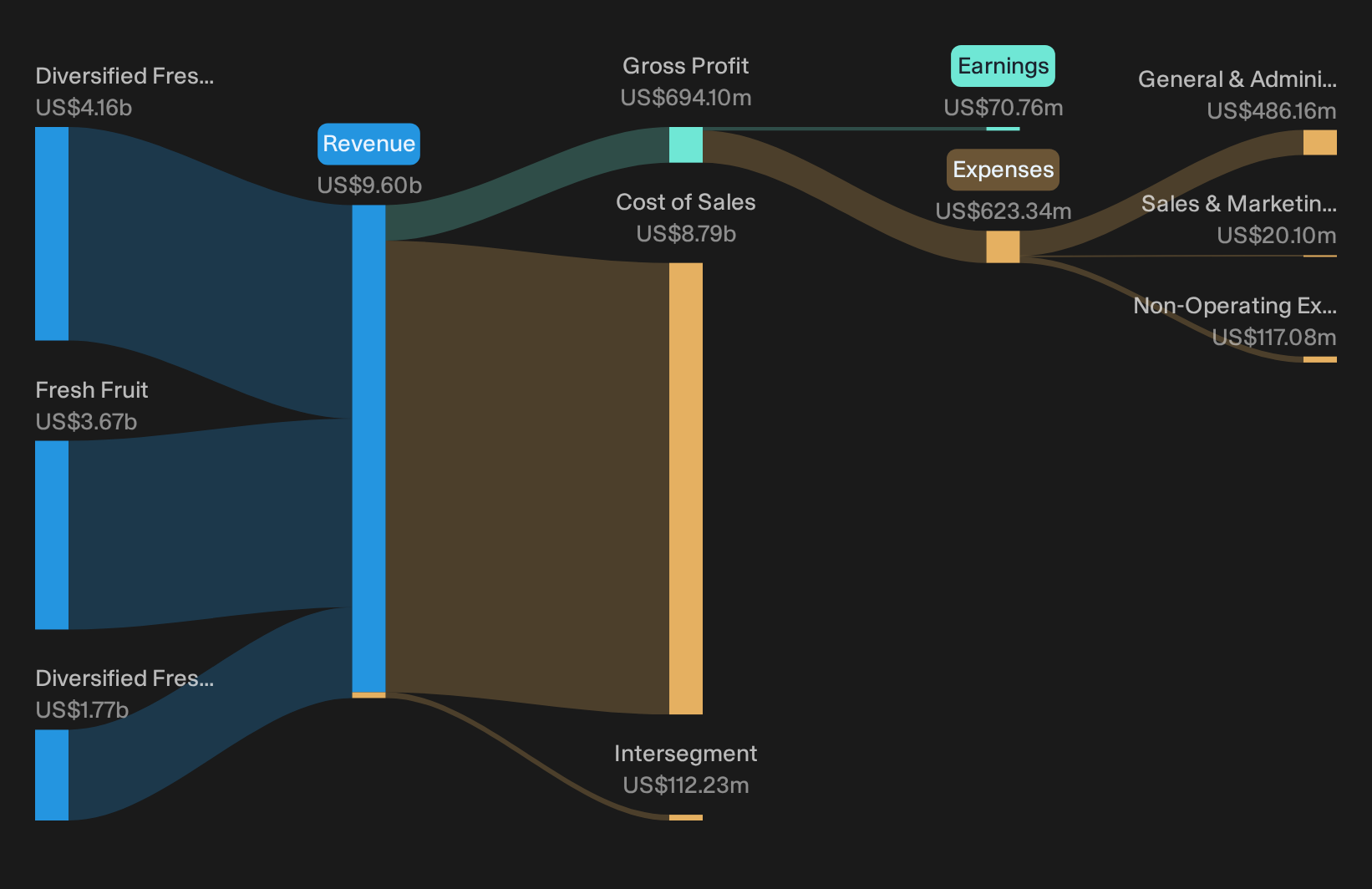
Operations: Revenue mainly comes from Diversified Fresh Produce EMEA at about $4.2b, Fresh Fruit around $3.7b, and Diversified Americas & ROW near $1.8b.
Market Cap: $1.2b
For a consumer staples screen focused on essential goods, Dole lines up neatly, because fresh produce is often one of the last items households cut back when budgets tighten. That matters when credit stress and weak sentiment start biting into more discretionary categories.
"Although Dole is investing about $100 million in automation, AI and advanced warehouse solutions in Scandinavia and has added the large Helsingborg distribution facility, execution risk on these projects and integrations could delay the expected efficiency benefits. This may instead elevate depreciation and operating expenses, limiting any uplift to earnings and cash generation."
What happens to Dole’s margin story if one unseen pressure on everyday fruit and vegetable economics moves the wrong way?
That margin risk cuts both ways, so read the full narrative for Dole to see how automation, pricing power, and cash returns could still reshape the Dole story.
Church & Dwight (CHD)
Overview: Church & Dwight makes everyday household and personal care essentials, from ARM & HAMMER detergents to THERABREATH oral care and Trojan products.
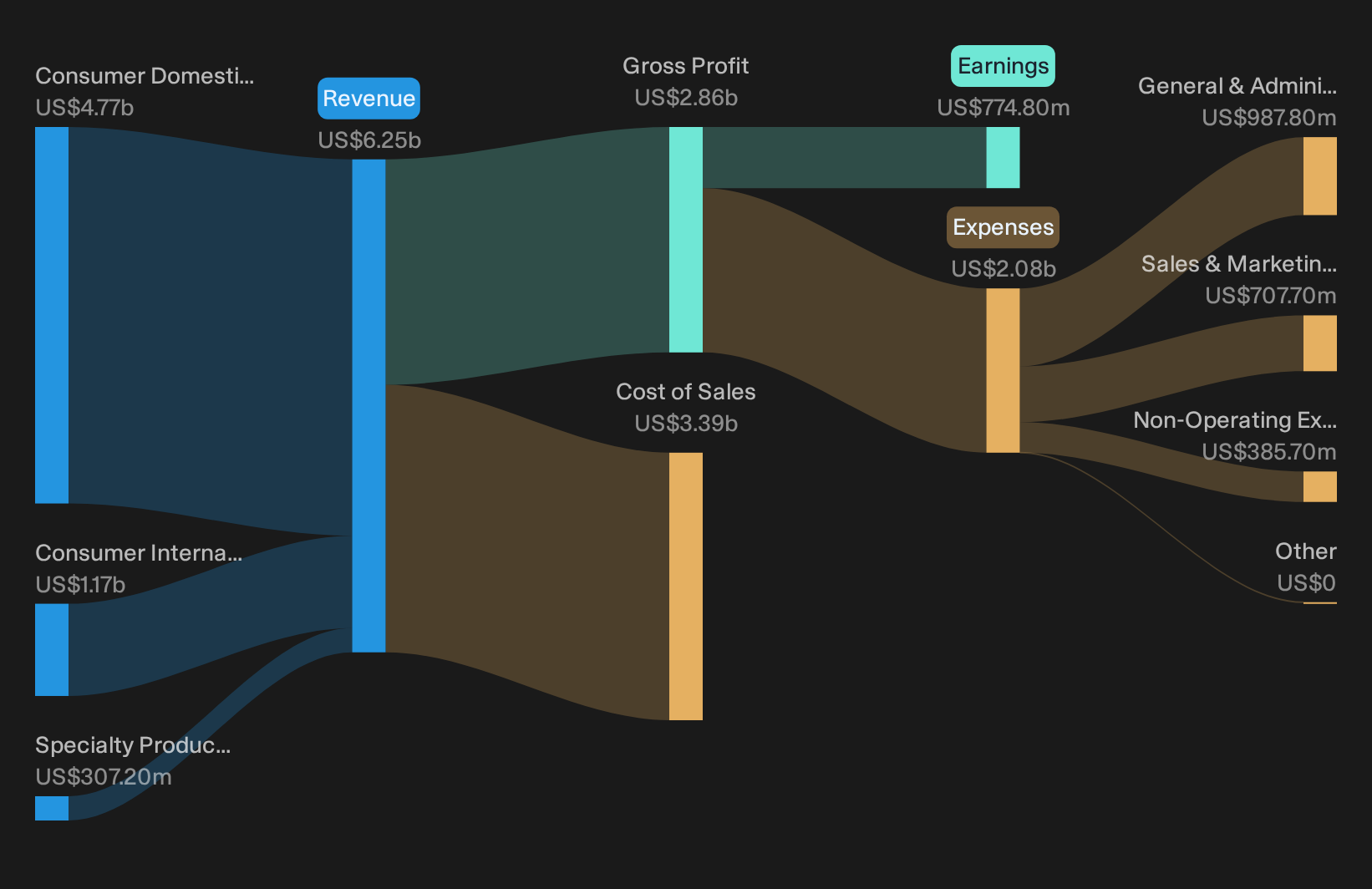
Operations: Church & Dwight generates about $4.8b from Consumer Domestic products, $1.2b from Consumer International lines, and $300 million from its Specialty Products Division.
Market Cap: $25.3b
Church & Dwight sits squarely in the consumer staples bucket, with products that show up on grocery lists even as households cut back on extras. This is part of the context for its push to refresh and extend key brands when budgets get squeezed.
"Systematic rollout of Church & Dwight's acquired brands like HERO, THERABREATH, Touchland and Miss Mouth's into new geographies, using the existing international footprint that already supports roughly $1.1b of sales, could widen the revenue base and lift earnings as higher margin products gain scale."
The real swing factor is how one quiet shift in product mix and category focus ultimately filters through to margins and long term earnings power.
That quiet shift starts to matter fast when you read the full narrative for Church & Dwight and see how mix, pricing and brand stretch could be accelerating beneath the surface.
Coca-Cola (KO)
Overview: Coca-Cola is a global beverage group that supplies everyday nonalcoholic drinks, from colas to water and sports beverages, across consumer staples channels.
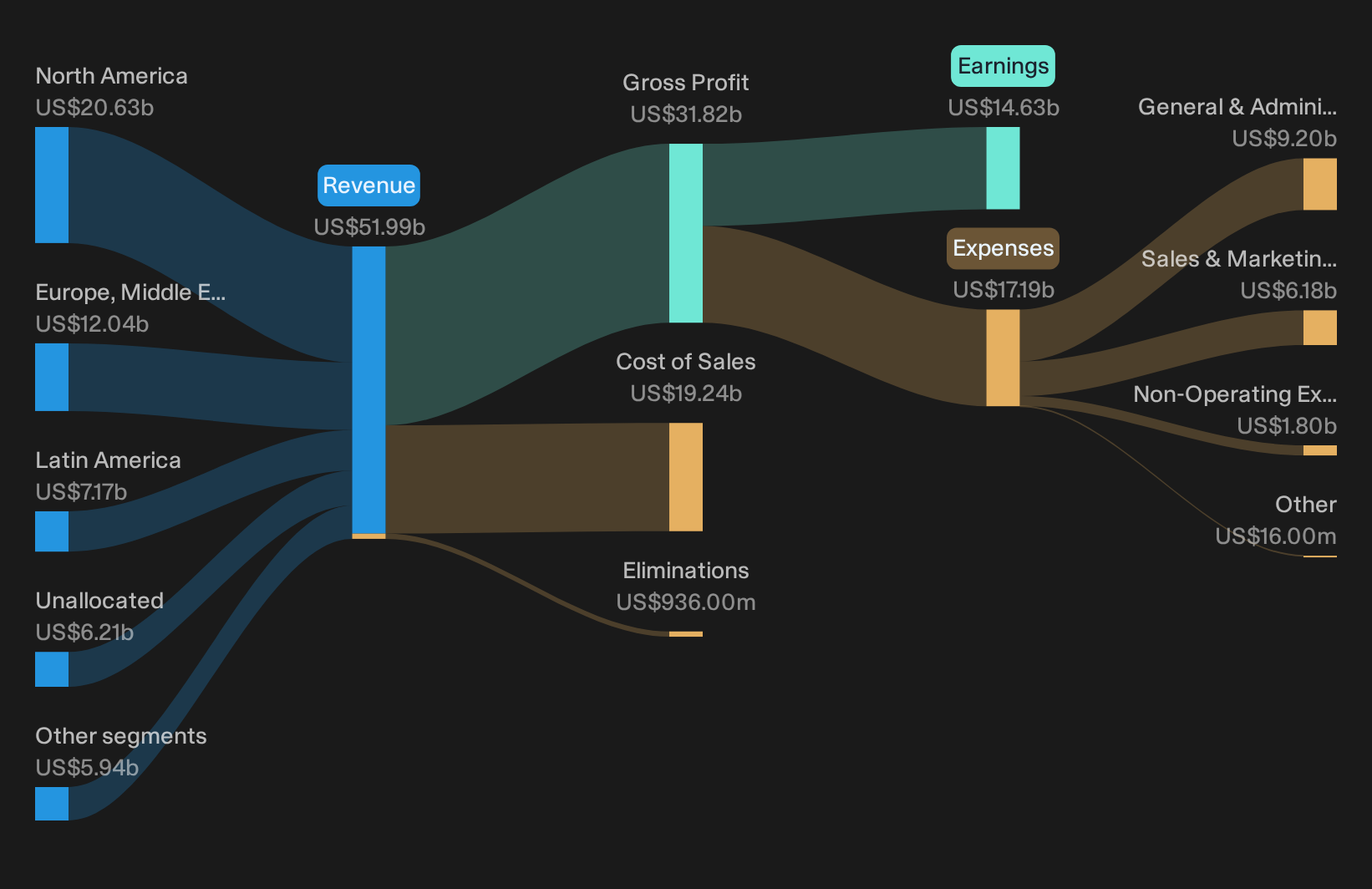
Operations: Coca-Cola generates about US$51.1b from nonalcoholic beverages, with North America contributing US$20.6b and Europe, Middle East & Africa around US$12.0b.
Market Cap: US$404.7b
Coca-Cola matters in this consumer staples screen because its drinks are low-ticket habits that often stay in shopping baskets even when households feel squeezed. This puts extra weight on how the business adapts its product mix and pricing to stressed budgets.
"Zero-sugar variants grew double-digits, proving adaptation to health trends."
The real test is what happens to that steady demand pattern if one quiet shift in how consumers trade between at-home packs and restaurant servings starts to move in the opposite direction of current expectations.
If that trade off between at home packs and away from home servings matters to you, read the full narrative for Coca-Cola to see how Coca-Cola’s demand story could be quietly decoupling.
Curious About Fresh Investing Alternatives
Fresh ideas move first. Stocks with quiet momentum can slip from under the radar to full breakout before the crowd reacts. Screen new opportunities while it matters and act now.
- Spot early movers with healthy balance sheets before momentum is obvious by scanning the curated list of solid balance sheet and fundamentals (24 results), which filters for financial strength and staying power.
- Explore potential income momentum while yields are still flying under the radar by reviewing a hand picked group of 4 dividend fortresses that focus squarely on dependable payouts.
- Position ahead of possible sector breakouts by reviewing a curated mix of 33 best rare earth metal stocks that could benefit if demand pressures tighten supply.
Have feedback on this article? Concerned about the content? Get in touch with us directly. Alternatively, email editorial-team@simplywallst.com
Contact Us
Contact Number :+852 3852 8500Webull Securities Limited is licensed with the Securities and Futures Commission of Hong Kong (CE No. BNG700) for carrying out Type 1 License for Dealing in Securities, Type 2 License for Dealing in Futures Contracts and Type 4 License for Advising on Securities.

English